
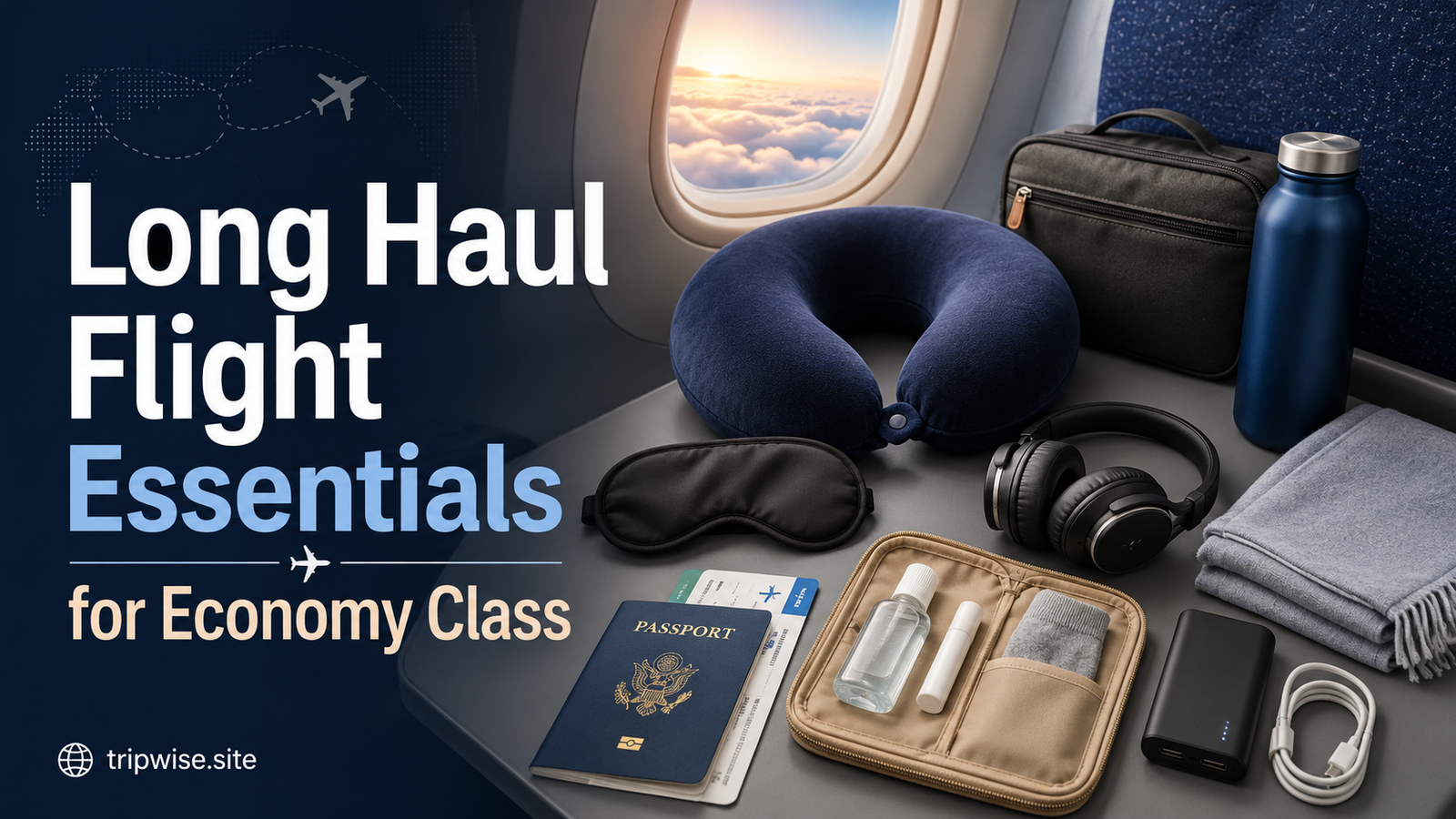

A long flight in economy class does not have to feel like an endurance test. You cannot create more legroom or control the cabin temperature, but you can improve how well you sleep, eat, stay organised and arrive at your destination. The difference usually comes down to packing a small number of useful items and keeping them where you can reach them.
The best long haul flight essentials for economy class solve predictable problems: limited space, noise, cold air, dry skin, low batteries, boredom and hours of sitting. This guide covers what deserves a place in your personal item, what can stay in the overhead bin and what should be left at home.
Quick Long Haul Flight Packing List
If you need a fast checklist, start here:
- Passport, visa documents and boarding pass
- Wallet, payment cards and emergency cash
- Phone with airline app and offline travel details
- Prescription medicines in original labelled packaging
- Refillable water bottle
- Compact snacks
- Supportive travel pillow
- Sleep mask
- Earplugs
- Noise-cancelling headphones
- Warm layer or large scarf
- Compression socks, when suitable for you
- Toothbrush, toothpaste and lip balm
- Hand sanitiser and tissues
- Charging cable and universal travel adapter
- Airline-compliant power bank
- Downloaded entertainment
- Pen
- Spare underwear, socks and T-shirt
- A small pouch for in-seat essentials
This may look like a long list, but almost everything fits inside one organised personal bag. The goal is not to carry more. It is to pack deliberately.
1. A Personal Item That Fits Under the Seat
Your cabin bag and in-flight bag have different jobs. A larger carry-on can hold clothing and items you will not need until arrival. Your personal item should contain everything you may use during the flight.
Choose a backpack or structured tote that fits the airline’s allowance and slides under the seat. Look for a wide opening, secure zips and a few useful compartments. Organise sleep items, toiletries and chargers in separate pouches, with documents in a secure but accessible pocket.
Before leaving home, confirm the airline’s current cabin baggage dimensions and weight limits. They can differ by airline, fare type and route.
2. Passport, Travel Documents and Offline Copies
Comfort items are replaceable; essential documents are not. Keep your passport, required visas, boarding pass, travel insurance details and any medical documentation together.
Save offline copies of your itinerary, accommodation address, airport transfer and emergency contacts. A screenshot is more dependable than an email that requires airport Wi-Fi. Store sensitive backups securely.
Carry a pen as well. Digital arrival systems are becoming common, but some destinations and airlines still use paper forms.
3. Refillable Water Bottle
Cabin air can feel uncomfortably dry. Take an empty refillable bottle through security and fill it after screening where safe water is available. A leakproof bottle with a simple cap is easier to manage in a cramped seat than an oversized flask.
Drink according to your normal needs and ask the crew for water when required. There is no universal amount for every passenger. Limit alcohol if it disrupts sleep or makes you feel worse on arrival.
Remember that airport security rules vary. Check the official rules for your departure airport before packing liquids.
4. Smart, Low-Mess Snacks
Pack a few familiar snacks even if meals are included. Choose compact, filling options without strong smells or excessive crumbs, such as nuts or seeds if permitted and safe for you, protein bars, crackers or dried fruit. Avoid food that melts, leaks or needs refrigeration. If you have dietary requirements, request a special meal before the airline’s deadline and bring a backup.
Food import restrictions apply at many destinations. Eat fresh produce and other restricted items before landing, or declare them when required. Never assume that food allowed through departure security can legally enter your destination country.
5. Supportive Travel Pillow
A good travel pillow supports your head instead of pushing it forward. Inflatable pillows save space, wraparound designs reduce sideways movement and foam models offer firmer support.
Test yours at home. Sit upright and check whether you can relax without your chin dropping sharply. If it feels bulky after five minutes, it will not improve after five hours.
Attach it securely to your bag rather than wearing it around the airport. If hygiene is a priority, choose a removable, washable cover.
6. Sleep Mask and Earplugs
An eye mask is a high-value overnight flight essential because cabin lights and seatback screens interrupt rest. Choose a contoured mask that blocks light without pressing on your eyes.
Foam or reusable silicone earplugs reduce conversation and engine noise. Pack a spare pair; they are also useful when headphones become uncomfortable.
No sleep accessory guarantees quality rest in an upright economy seat. The realistic goal is to reduce disturbances and create a repeatable sleep routine.
7. Noise-Cancelling Headphones and a Wired Option
Noise-cancelling headphones make engine noise less tiring and improve entertainment at a lower listening volume. Over-ear models provide better passive isolation, while earbuds save space.
Do not rely entirely on Bluetooth. Some in-flight entertainment systems still require a 3.5 mm wired connection, and plug configurations vary. Pack the correct cable or adapter for your headphones. Download your own entertainment before departure in case the onboard system is unavailable or the selection is limited.
Keep volume at a safe level and remain able to hear crew instructions when necessary.
8. Comfortable Layers
Cabin temperature can shift. Wear breathable, non-restrictive clothing and add or remove layers as needed. A lightweight hoodie, cardigan or large scarf provides warmth without taking much space.
Choose a comfortable waistband and shoes that can accommodate normal foot swelling. Walking barefoot or wearing only loose socks around the cabin is not a good safety or hygiene choice.
Your destination matters too. Keep a weather-appropriate outer layer accessible so you do not arrive in a cold city wearing clothing chosen for a warm departure airport.
9. Compression Socks and Regular Movement
Compression socks may improve comfort for some passengers, but they are not a substitute for movement and are not suitable for every medical situation. Choose the correct size and seek medical advice if you have circulation problems, a history of blood clots, recent surgery, pregnancy or other risk factors.
The CDC advises travellers on long trips to move their legs frequently and exercise their calf muscles. When it is safe and permitted, stand or walk periodically. While seated, flex your ankles, move your feet and avoid staying in one position for the entire flight.
Do not start aspirin or any other medicine solely for a flight unless a qualified clinician has specifically advised it for you. If you have an increased risk of deep vein thrombosis, get personalised medical guidance before travelling.
10. A Small Personal-Care Kit
A basic freshen-up routine can make the final hours of a long flight more comfortable. Pack:
- Toothbrush and travel-size toothpaste
- Lip balm
- Small moisturiser
- Tissues
- Hand sanitiser
- Deodorant
- Face wipes or a reusable cleansing cloth
- Any menstrual or personal-care products you may need
Keep liquids, gels and aerosols within the security limits that apply at your departure airport. Place them in the required transparent bag before arriving at screening.
Use unscented products where possible. Strong perfume, sprays and scented creams can bother nearby passengers in a shared cabin.
11. Prescription Medicines and a Basic Health Kit
Essential medicine belongs in your cabin bag, not checked luggage. Keep it in original labelled packaging and carry supporting documentation when required. Pack enough for the journey plus a reasonable delay, subject to destination import rules. A small health kit can include adhesive bandages and familiar, approved medicines you normally use.
Do not try a new sleep aid for the first time on a plane. Sedating medicines can have side effects, may interact with alcohol or other medication and can reduce mobility. Ask your doctor or pharmacist for individual advice.
12. Charging Cable, Adapter and Compliant Power Bank
Even when an aircraft advertises seat power, the socket may be unavailable, loose or too slow for your device. Start with fully charged electronics and pack a reliable cable. A short cable is tidy at the seat; a longer one is useful when the outlet is in an awkward position.
A compact power bank provides backup power, but battery rules require attention. Current IATA passenger guidance says power banks must be carried in hand baggage, not checked baggage. Capacity limits and onboard-use rules apply, and airlines can impose stricter conditions. If your cabin bag is taken at the gate, remove the power bank and other spare batteries before the bag goes into the hold.
Check your airline’s policy shortly before departure. Keep the capacity label readable, protect exposed terminals and never travel with a damaged, swollen or recalled battery.
13. Downloaded Entertainment
A long flight is easier when you do not depend on one entertainment system. Download:
- Two or three films or television episodes
- A podcast playlist
- An audiobook
- An e-book
- Offline music
- A simple offline game
Test each app in airplane mode to confirm it works without a fresh login. Download destination maps, language packs and the airline’s app too. Balance screen time with rest so you do not arrive unnecessarily tired.
14. Spare Clothes
A change of underwear, socks and a lightweight T-shirt is valuable after a spill, missed connection or delayed bag. Pack them in a reusable zip pouch that can later hold worn items. Include the first layer needed for your destination’s weather.
15. Cleaning Essentials
Hand sanitiser is useful when you cannot reach a washroom, while tissues and a few disinfecting wipes can clean the tray table or handle a spill. Store used items until the crew collects waste; never leave loose rubbish in the seat pocket.
Build a Small Seat-Pocket Kit
The smartest way to manage economy-class space is to create a compact pouch before boarding. Put in the items you expect to use during the next few hours:
- Headphones and cable
- Earplugs
- Sleep mask
- Lip balm
- Tissues
- Charging cable
- Pen
- One snack
- Any medicine needed during the flight
After boarding, take out the pouch and water bottle, then place the main personal item under the seat. This keeps essentials together and protects your limited legroom from a bag that is constantly being opened.
Do not leave your passport, wallet or phone unattended in the seat pocket. These areas are easy to forget during disembarkation.
What Not to Pack for a Long Flight
More gear does not always mean more comfort. Leave out:
- A large blanket that consumes most of your bag
- A pillow you have not tested
- Multiple heavy books
- Full-size toiletries
- Strong fragrances
- Messy or strongly scented food
- Unlabelled medicine
- Damaged batteries or power banks
- Expensive items you will not use in transit
Also avoid packing your personal item so tightly that every security check becomes difficult. Leave a little room for items you may buy after screening.
How to Prepare Before Boarding
Good preparation makes your flight essentials more effective.
Check in online and review the seat map. An aisle seat provides easier cabin access; a window seat offers a surface to lean against and fewer interruptions. Choose based on whether movement or uninterrupted rest matters more.
Organise sleep around the destination when practical. After boarding, change your watch to local time and use light, meals and rest as cues. Do not expect to eliminate jet lag completely.
Request dietary or accessibility support early; special meals, wheelchair assistance and some seating accommodations need advance notice.
Finally, place valuables, medicine, documents, batteries and one change of clothes in your cabin baggage. Checked luggage can be delayed, and gate-checked cabin bags may become inaccessible.
A Simple Routine During the Flight
A routine prevents the flight from becoming one long block of sitting and screen time:
- Settle your seat area and store loose items securely.
- Drink water and eat based on your needs and the destination schedule.
- Move your ankles and legs regularly while seated.
- Stand or walk when the seatbelt sign is off and cabin conditions allow.
- Use your sleep kit when you are ready to rest.
- Freshen up and change a clothing layer before landing.
- Check the seat pocket, floor and charging area before leaving.
Always follow crew instructions. Keep your seatbelt fastened whenever seated, even if the sign is off, because turbulence can occur without warning.
Frequently Asked Questions
What should I pack for a 10-hour economy flight?
Prioritise documents, medicine, water, snacks, a supportive pillow, sleep mask, earplugs, headphones, a warm layer, a hygiene kit, chargers and offline entertainment. Keep these items in a personal bag that fits under the seat.
Are compression socks necessary for a long flight?
Not for everyone. They may help some passengers feel more comfortable, but correct fit and individual medical factors matter. Regular movement is still important. Ask a clinician for advice if you have an increased risk of blood clots or an existing circulation condition.
Can I take a power bank on an international flight?
Power banks generally belong in carry-on baggage, not checked luggage, but capacity and use restrictions apply. Rules can change and airlines may be stricter than general guidance. Check the airline and departure-airport rules before every trip.
How can I sleep better in economy class?
Use a tested neck-support solution, a light-blocking mask and earplugs or noise-cancelling headphones. Wear comfortable layers, reduce avoidable interruptions and time your rest around the destination when possible. Avoid relying on untested sleep medication.
Should I put my flight essentials in a carry-on suitcase or personal item?
Keep medicine, documents, valuables, batteries and anything needed during the flight in your personal item. The suitcase may be in the overhead bin or checked at the gate, so it should not contain anything you cannot be without.
Final Thoughts
The most useful long haul flight essentials for economy class are not luxury gadgets. They are compact items that solve a specific in-flight problem without taking away more space than they provide. Organise your documents, protect your sleep, bring reliable power and entertainment, pack a few personal-care basics and make regular movement part of the journey.
Review your airline, airport and destination rules before departure, because baggage, battery, liquid, food and medicine requirements can change. With a focused carry-on and a simple routine, you can step off a long economy flight feeling more organised, comfortable and ready for the trip ahead.