
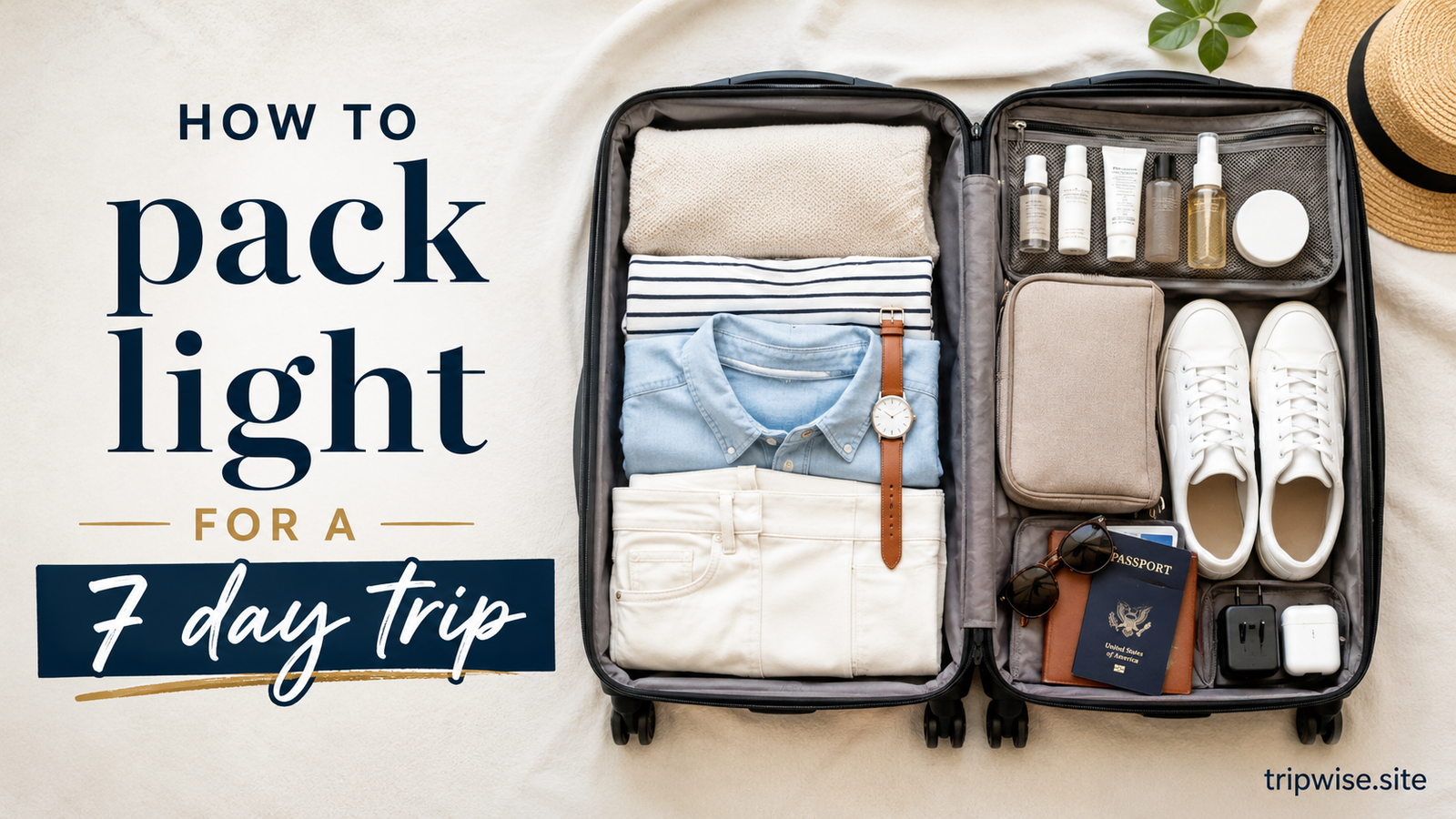

Wondering how to travel with only a carry on bag? It is possible for a weekend, a one-week vacation, or even a longer trip. The key is not to squeeze more into a smaller suitcase. It is to bring fewer items, choose pieces that work together, and plan for laundry instead of packing a new outfit for every day.
Start by checking your airline’s baggage limits. Then build a small, coordinated wardrobe, reduce liquids, wear your bulkiest items, and keep important documents, medication, and electronics easy to reach. This guide shows you exactly how to do it.
Why Travel With Only a Carry-On Bag?
Carry-on-only travel can make a journey simpler from departure to arrival. You may be able to skip the check-in counter, avoid waiting at the baggage carousel, and move more easily between airports, trains, hotels, and public transport.
Other practical benefits include:
- Less risk of an airline delaying or misrouting your main bag
- Easier movement through stations, stairs, and crowded streets
- Fewer unnecessary items to organize during the trip
- Less time spent packing, unpacking, and repacking
- Potential savings when checked baggage is not included in the fare
However, traveling with one bag is not always the best choice. A checked bag may be more practical when you need specialist equipment, bulky winter clothing, large liquid products, or items that cannot pass through cabin-baggage security.
1. Check Your Airline’s Carry-On Rules First
There is no single carry-on size or weight limit that applies to every airline. Allowances can change by carrier, aircraft, route, cabin class, and fare type. Some tickets include an overhead-bin bag and a personal item, while others include only a small under-seat bag.
Before choosing your luggage:
- Open the airline’s official baggage page.
- Check the allowance for your exact fare and route.
- Confirm the maximum dimensions and weight.
- Measure the bag including its wheels, handles, and external pockets.
- Check whether a personal item is included.
- Repeat the process for every airline on a multi-carrier trip.
Do not rely only on a suitcase label that says “cabin approved.” The airline’s current rules are what matter.
2. Choose the Right Carry-On Bag
The best bag is one that fits the airline’s limits and suits the way you will travel after landing.
A wheeled suitcase is useful in airports, hotels, and places with smooth paths. A travel backpack is usually easier on stairs, public transport, cobblestones, and routes with frequent accommodation changes. A soft-sided bag can provide some flexibility, but an overpacked bag may still fail a size check.
Look for:
- A lightweight empty bag
- A simple rectangular interior
- Strong zippers and handles
- Comfortable straps if using a backpack
- A separate laptop section if needed
- External access for documents or a liquids bag
Bag capacity alone is not enough. A high-capacity backpack can still exceed the airline’s permitted dimensions when fully packed.
3. Pack for the Itinerary, Not Every Possibility
One of the biggest causes of overpacking is preparing for situations that are unlikely to happen.
Review your trip day by day and write down:
- Expected weather
- Planned activities
- Dress requirements
- Access to laundry
- Toiletries provided by the accommodation
- Items that can be bought easily at the destination
Pack for confirmed plans first. Add only one flexible backup outfit if the trip genuinely needs it. Avoid packing separate clothes for several imaginary scenarios.
It is also wise to check the forecast again 24 to 48 hours before departure. A current forecast is more useful than assumptions made weeks earlier.
4. Build a Small Capsule Wardrobe
A capsule wardrobe is a limited group of clothes that can be worn in different combinations. It is the most effective way to create more outfits with fewer pieces.
Choose two or three neutral base colors, then add one accent color if you want variety. Every top should work with most bottoms, and every packed shoe should match nearly every outfit.
A simple one-week clothing formula is:
- Four or five tops
- Two or three bottoms
- One light sweater, cardigan, or mid-layer
- One lightweight outer layer suited to the weather
- One sleep outfit
- Underwear and socks
- One optional dressier outfit or activity-specific item
This is a starting point, not a fixed rule. Hot climates, formal events, religious or cultural dress requirements, and outdoor activities may change what you need.
Choose fabrics that are comfortable, quick to dry, and easy to wear more than once when appropriate. Avoid bringing several pieces that perform the same job.
5. Limit Your Shoes
Shoes take up more space than almost anything else in a carry-on. For most general trips, wear one pair and pack no more than one additional pair.
A practical combination might be:
- Comfortable walking shoes worn during travel
- Lightweight sandals, flats, or smarter shoes packed in the bag
Put small items such as socks inside clean shoes to use otherwise empty space. Place packed shoes in a washable shoe bag or shower cap to keep them separate from clothing.
If a pair works with only one outfit, it is probably not worth the space.
6. Use Packing Cubes Without Overpacking
Packing cubes help organize a small bag, but they do not create extra weight allowance. Their main value is keeping categories together and making it easier to remove one group of items without disturbing everything else.
Use one cube for tops, one for bottoms, and a smaller cube for underwear or sleepwear. Compression cubes can reduce the volume of soft clothing, but over-compressing them can make a bag heavy, rigid, and difficult to fit into a baggage sizer.
For the best use of space:
- Roll soft items such as T-shirts and casual trousers.
- Fold structured clothing along its natural seams.
- Fill small gaps with socks and underwear.
- Keep heavy items close to the wheels of a suitcase or close to your back in a backpack.
- Leave some free space for items purchased during the trip.
7. Reduce Toiletries and Follow Security Rules
Toiletries often take up more room than expected. Bring only the amount you will use, choose solid alternatives when practical, and check what your accommodation already provides.
For passengers departing from U.S. airports, the TSA liquids rule generally limits liquids, aerosols, gels, creams, and pastes in carry-on baggage to containers of 3.4 ounces or 100 milliliters or less, placed in one quart-sized bag. Exceptions may apply to certain medically necessary liquids and infant or child nourishment.
Security rules can differ by country and airport, so check the official authority for your departure point as well as any airport where you will pass through security again.
Ways to reduce toiletries include:
- Transfer products into correctly sized, leak-resistant containers.
- Use solid soap, shampoo, deodorant, or toothpaste tablets where suitable.
- Pack only daily essentials.
- Buy inexpensive products after arrival for a longer stay.
- Share commonly used products with a travel companion.
Never assume a partly filled full-size container is allowed. Security limits normally apply to the container’s stated capacity, not the amount left inside it.
8. Pack Electronics Carefully
Bring only the devices you expect to use. A phone may replace a camera, e-reader, printed documents, and entertainment system on some trips.
A compact electronics kit might include:
- Phone
- One multi-port charger
- Charging cables
- Plug adapter for international travel
- Earbuds or headphones
- Laptop or tablet only when necessary
- Power bank
The Federal Aviation Administration’s PackSafe guidance states that spare lithium batteries and power banks must be kept in carry-on baggage and protected from short circuits. If your carry-on is taken for gate checking, remove these items and keep them with you in the cabin. Airlines may apply additional restrictions, so confirm the rules before departure.
Download boarding passes, maps, booking details, and essential documents for offline access before leaving home.
9. Wear Your Bulkiest Items
Your travel outfit should reduce the amount of space needed inside the bag. Wear the bulkiest shoes, coat, sweater, or jacket when practical.
Choose comfortable layers that can be adjusted during the journey. A light jacket with secure pockets can also keep small travel essentials accessible, but it should not be used to bypass an airline’s baggage rules.
Once onboard, place outer layers neatly rather than taking up valuable space inside the carry-on.
10. Use Your Personal Item Strategically
If your fare includes a personal item, use it for things you need during the journey or cannot afford to lose.
Keep the following within easy reach:
- Passport or identification
- Wallet and phone
- Medication
- Travel documents
- Valuable electronics
- Charging cable and power bank
- One small comfort kit
- A clean top and underwear for longer journeys
Your personal item must still fit the airline’s published dimensions. Do not treat it as an unlimited second suitcase.
Carry-On Only Packing List for 7 Days
Use this checklist as a flexible starting point.
Clothing
- 4–5 tops
- 2–3 bottoms
- 1 light mid-layer
- 1 weather-appropriate outer layer
- 1 sleep outfit
- 5–7 pairs of underwear
- 4–7 pairs of socks, depending on footwear and laundry plans
- 1 swimsuit if required
- 1 activity-specific or smarter outfit if required
Shoes
- 1 versatile pair worn in transit
- 1 lightweight pair packed
Toiletries
- Toothbrush and travel-size toothpaste
- Deodorant
- Essential skincare
- Small hair-care products
- Sunscreen
- Razor or grooming essentials
- Prescription medication
- Small basic first-aid items
Electronics
- Phone
- Charger and cables
- Plug adapter if needed
- Earbuds or headphones
- Power bank
- Optional laptop, tablet, camera, or e-reader
Documents and Essentials
- Passport or government-issued identification
- Visa or entry documents when required
- Payment cards and emergency cash
- Travel insurance details
- Booking confirmations
- Reusable water bottle, emptied before airport security
- Sunglasses
- Small laundry bag
How to Pack a Carry-On for More Than 7 Days
For a longer trip, do not keep adding clothes. Pack roughly the same core wardrobe and plan to wash items.
You can:
- Book accommodation with laundry facilities.
- Use a local laundromat or hotel service.
- Wash a few lightweight items in a sink when the fabric and accommodation allow it.
- Carry a small amount of suitable laundry soap within applicable liquid rules.
- Wear clothing more than once when it remains clean and appropriate.
The difference between packing for one week and two weeks is usually access to laundry, not twice as much clothing.
Adjusting the System for Different Trips
Cold-Weather Travel
Use thin insulating layers instead of several bulky sweaters. Wear the heaviest coat and boots during travel. Gloves, a hat, and a scarf provide warmth without taking as much space as additional outerwear.
Business Travel
Build outfits around one neutral jacket or blazer, two bottoms, and interchangeable shirts or tops. Wear the bulkiest formal shoes and pack garments carefully to reduce creasing.
Beach Travel
Choose lightweight clothing, quick-drying swimwear, and compact sandals. Check whether the accommodation supplies towels, because a full-size beach towel can consume a large part of the bag.
Trips With Specialist Gear
Carry-on-only travel may not be realistic for camping equipment, sports gear, large camera systems, or tools. Check airline and security restrictions before deciding how to transport them.
Common Carry-On Packing Mistakes
Avoid these frequent problems:
- Checking only the bag size and ignoring the weight limit
- Assuming every fare includes an overhead-bin bag
- Packing too many shoes
- Taking full-size toiletries
- Bringing duplicate clothing with the same purpose
- Filling every inch before the trip begins
- Packing valuables or essential medication where they are difficult to reach
- Leaving a power bank inside a bag that is gate checked
- Forgetting to allow space for souvenirs
- Ignoring the rules of a connecting airline or airport
Do a final test at home. Close the bag without forcing the zipper, lift it comfortably, weigh it, and confirm that it fits within the airline’s measurements.
Final 10-Minute Carry-On Check
Before leaving for the airport, confirm that:
- The bag meets your airline’s dimensions and weight limit.
- Required documents are valid and accessible.
- Liquids meet the rules for the departure airport.
- Medication is packed safely and easy to reach.
- Power banks and spare batteries are in the cabin bag.
- Valuables are not in a bag that may be checked.
- You can carry the bag without assistance.
- There is some empty space left for the return journey.
Frequently Asked Questions
Can you travel for two weeks with only a carry-on?
Yes. Pack a coordinated wardrobe for about one week, arrange laundry during the trip, and rewear suitable items. Climate, dress requirements, and specialist activities will determine whether this is practical.
How do I pack a carry-on for seven days?
Start with four or five tops, two or three bottoms, one mid-layer, essential underwear, and no more than two pairs of shoes including the pair you wear. Add only activity-specific pieces you know you will use.
Is it better to roll or fold clothes in a carry-on?
Use both methods. Roll soft, casual pieces to fill gaps and fold structured or wrinkle-prone clothing along its seams. Organization matters more than using one technique for every item.
Are packing cubes worth using?
Packing cubes are useful for organization and compression, especially when you change hotels frequently. They will not reduce the bag’s weight, and overfilling them can make the luggage too rigid or bulky.
Does a backpack count as a carry-on bag?
It depends on its size and the airline’s rules. A backpack may count as the main carry-on or as a personal item if it fits the applicable limits. The bag’s label or style does not determine its category.
What should never go in a carry-on?
Rules depend on the departure country, airport, airline, and item. Check the official prohibited-items list before packing sharp objects, tools, sporting equipment, flammable products, weapons, or large liquids. Do not guess when an item may be restricted.
Can I take medication in a carry-on?
Medication should usually stay accessible in your cabin baggage. Requirements for liquids, needles, controlled medicines, documentation, and international travel vary, so check the official security, airline, and destination-country guidance for your medication.
Final Thoughts
Learning how to travel with only a carry-on bag is mainly a planning exercise. Check the rules first, pack clothes that work together, limit shoes and toiletries, and plan to do laundry on longer trips.
The goal is not to pack the smallest possible bag at any cost. It is to carry what you will genuinely use while keeping the trip comfortable, compliant, and easy to manage.