
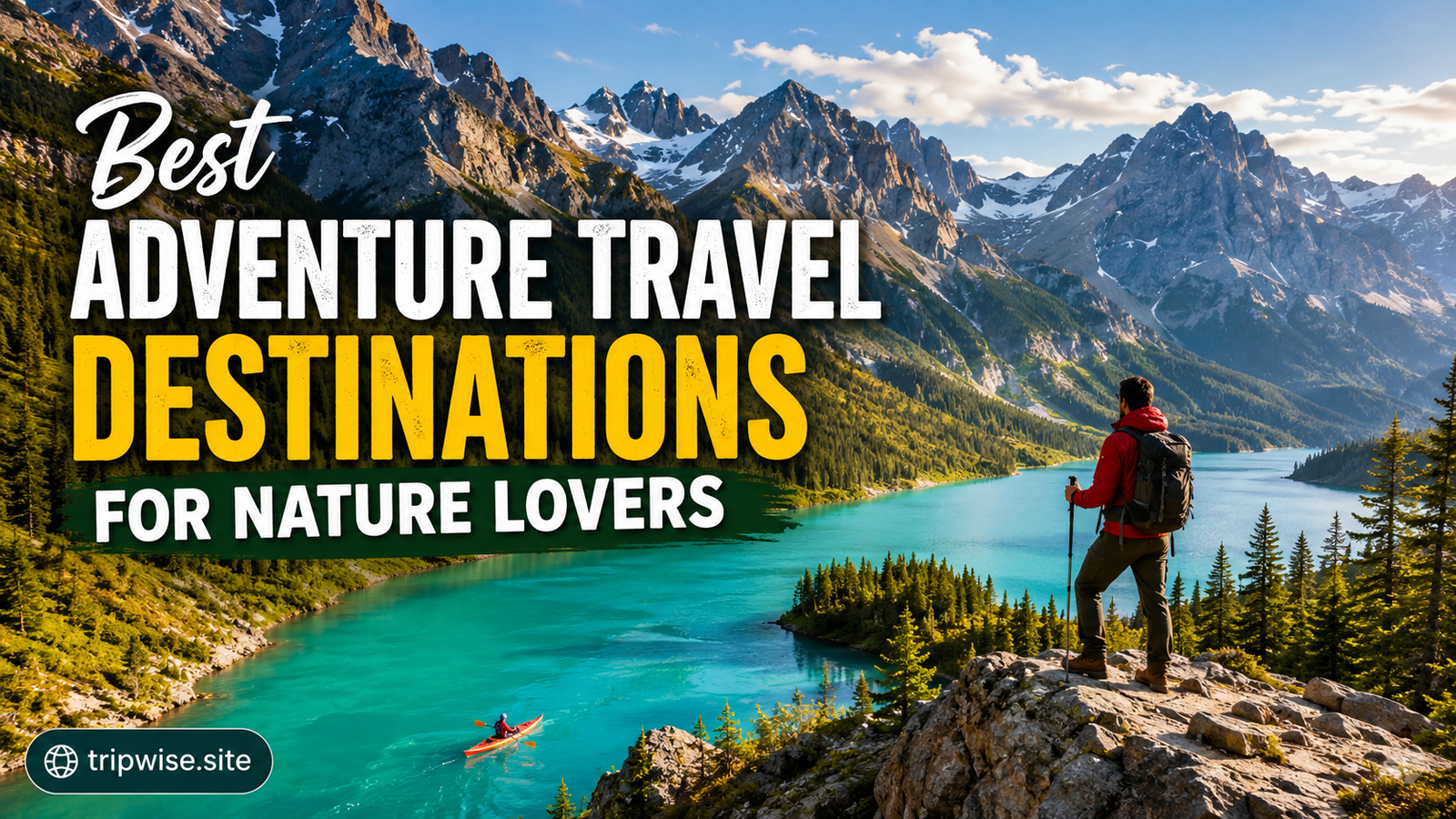

The best adventure travel destinations for nature lovers offer more than beautiful views. They give you the chance to hike through mountains, explore rainforests, watch wildlife, paddle across clear water, and experience nature closely.
However, every destination offers a different type of adventure. Patagonia is ideal for serious trekking. Costa Rica is better for rainforest wildlife. Iceland is perfect for road trips, waterfalls, glaciers, and volcanic landscapes.
This guide covers 12 unforgettable destinations. You will learn what makes each place special, the best activities to try, and the most suitable time to visit.
Weather, permits, and park rules can change. Always check official travel and park websites before booking.
1. Patagonia, Chile and Argentina
Patagonia is one of the world’s most dramatic hiking destinations. It is filled with granite mountains, glaciers, blue lakes, open grasslands, and remote valleys.
Torres del Paine National Park in Chile is famous for the W Trek and O Circuit. In Argentina, El Chaltén offers excellent day hikes around Mount Fitz Roy and Cerro Torre.
The weather can change quickly, even during summer. Strong wind, cold rain, and bright sunshine can all occur on the same day. Book popular campsites and accommodation early.
- Best for: Mountain trekking and glacier scenery
- Best time to visit: November to March
- Top activities: Hiking, camping, kayaking, and glacier tours
Check the latest Torres del Paine travel information before planning your route.
2. South Island, New Zealand
New Zealand’s South Island is a good choice for both new and experienced adventure travellers. It combines mountain scenery with organised trails, visitor centres, guided tours, and convenient transport options.
Fiordland National Park is home to the Milford, Kepler, and Routeburn tracks. Other highlights include Aoraki/Mount Cook, Queenstown, Lake Wānaka, and the West Coast.
You can choose short nature walks, multi-day hikes, kayaking trips, mountain biking, or guided adventure activities. Popular huts and campsites can fill quickly, so advance booking is important.
- Best for: A complete outdoor adventure holiday
- Best time to visit: November to April
- Top activities: Hiking, kayaking, cycling, and scenic road trips
Use New Zealand’s official Great Walks guide to compare routes.
3. Iceland
Iceland is full of waterfalls, glaciers, lava fields, black-sand beaches, hot springs, and volcanic landscapes. Many natural attractions can be visited during a road trip, making the country easy to explore.
Summer offers longer daylight hours and better access to hiking areas. You can visit the South Coast, explore geothermal areas, walk through lava landscapes, or join a guided glacier tour.
Iceland’s weather and road conditions can change very quickly. Glacier hiking should only be done with proper equipment and a qualified guide.
- Best for: Scenic road trips and unusual landscapes
- Best time to visit: June to September for hiking and wider road access
- Top activities: Glacier hiking, waterfalls, hot springs, and coastal walks
Check SafeTravel Iceland for current road, weather, and hiking alerts.
4. Costa Rica
Costa Rica combines rainforests, volcanoes, beaches, rivers, and wildlife within a relatively small country. More than 25% of its territory is protected for conservation, according to the Costa Rica Tourism Board.
You can hike around Monteverde, go rafting near La Fortuna, watch wildlife in national parks, or relax on the Pacific and Caribbean coasts. Manuel Antonio is suitable for an easy nature trip, while the Osa Peninsula offers a more remote rainforest experience.
The dry season normally provides easier travel conditions. The rainy season brings greener landscapes but can make roads and trails more difficult.
- Best for: Wildlife and first-time adventure travellers
- Best time to visit: December to April, depending on the region
- Top activities: Rainforest hiking, rafting, zip-lining, surfing, and wildlife walks
Explore Costa Rica’s official national park guide.
5. Canadian Rockies, Canada
The Canadian Rockies are known for high mountains, turquoise lakes, forests, glaciers, and wildlife. Banff, Yoho, and Jasper national parks provide outdoor activities for different fitness levels.
Visitors can enjoy short lake walks, full-day mountain hikes, canoeing, cycling, camping, and scenic drives. The region is popular in summer, so accommodation and transport should be booked early.
Wildlife closures, wildfire smoke, road restrictions, and shuttle requirements can affect travel plans. Keep your schedule flexible and check park alerts regularly.
- Best for: Alpine lakes and mountain hiking
- Best time to visit: June to September
- Top activities: Hiking, canoeing, camping, cycling, and wildlife tours
Visit the official Banff National Park website for current conditions.
6. Norwegian Fjords
Norway’s western fjords bring mountains, waterfalls, deep water, and small villages together. The region can be explored by boat, kayak, train, bicycle, or hiking trail.
Popular areas include Geirangerfjord, Nærøyfjord, Sognefjord, and Hardangerfjord. Travellers can enjoy gentle boat trips or choose more challenging mountain hikes and glacier experiences.
Some famous hiking routes are steep and exposed. Check the distance, elevation, weather, and difficulty before starting. Do not choose a trail only because it is popular on social media.
- Best for: Fjord views, hiking, and kayaking
- Best time to visit: May to September
- Top activities: Hiking, kayaking, cycling, rafting, and fjord cruises
Plan your journey with the official Norway fjord guide.
7. Dolomites, Italy
The Dolomites are famous for pale limestone mountains, green valleys, beautiful lakes, and comfortable mountain huts. They are an excellent choice for travellers who want nature, hiking, and local culture in one trip.
You can take easy valley walks, complete a hut-to-hut journey, or try a protected via ferrata climbing route. Experienced hikers can explore longer Alta Via routes.
Mountain huts reduce the need to carry camping equipment, but the trails still require preparation. Sudden storms, exposed routes, and snow can create difficult conditions.
- Best for: Hut-to-hut hiking and mountain culture
- Best time to visit: June to September
- Top activities: Hiking, via ferrata, cycling, and trail running
Learn more from UNESCO’s official Dolomites overview.
8. Annapurna Region, Nepal
Nepal’s Annapurna region offers mountain scenery, village life, forests, high passes, and traditional culture. Routes range from short three-day trips to long-distance treks lasting several weeks.
Popular choices include the Annapurna Circuit, Annapurna Base Camp, Mardi Himal, and Poon Hill. The right route depends on your fitness, available time, and experience with altitude.
Altitude sickness can affect anyone, including fit travellers. Walk slowly, include enough time for acclimatisation, and take symptoms seriously. Many routes also require a licensed guide and a trekking-agency-issued TIMS card.
- Best for: High-altitude trekking and cultural experiences
- Best time to visit: March to May and October to November
- Top activities: Mountain trekking, village stays, and photography
Read the official Annapurna trekking guide and TIMS requirements.
9. Galápagos Islands, Ecuador
The Galápagos Islands are one of the best places for close but controlled wildlife experiences. The islands contain volcanic landscapes and unusual land and marine species.
Visitors can snorkel, kayak, walk across lava fields, and observe giant tortoises, marine iguanas, sea lions, and seabirds. Cruises reach remote locations, while land-based trips provide more freedom on inhabited islands.
The Galápagos is a protected destination. Stay on approved routes, keep a safe distance from animals, and follow the instructions of local naturalist guides.
- Best for: Wildlife, snorkeling, and natural history
- Best time to visit: Year-round
- Top activities: Snorkeling, diving, kayaking, hiking, and wildlife watching
Read UNESCO’s Galápagos Islands overview before your visit.
10. Sabah, Malaysian Borneo
Sabah combines tropical rainforest wildlife with mountain adventure. Mount Kinabalu rises to 4,095.2 metres, while the Lower Kinabatangan River passes through an area rich in wildlife.
A well-planned trip can include a guided Mount Kinabalu climb, jungle walks, Sepilok, and boat trips along the Kinabatangan River. Travellers may see orangutans, proboscis monkeys, hornbills, and other wildlife, although sightings are never guaranteed.
Rain can occur throughout the year. Mount Kinabalu requires advance booking and a registered guide.
- Best for: Rainforest wildlife and mountain climbing
- Best time to visit: March to October, with regional differences
- Top activities: Mountain climbing, river safaris, jungle walks, and birdwatching
Check official information for Mount Kinabalu and the Kinabatangan Wildlife Sanctuary.
11. Azores, Portugal
The Azores are a group of nine volcanic islands in the Atlantic Ocean. They offer crater lakes, green hills, coastal cliffs, hot springs, and excellent ocean experiences.
São Miguel is a good island for a first visit. Pico offers a more challenging summit hike, while Faial and São Jorge provide beautiful coastal and volcanic trails.
The weather changes quickly, and sea conditions can affect boat trips. Avoid creating a schedule with no spare time between activities.
- Best for: Volcanic scenery and whale watching
- Best time to visit: May to October
- Top activities: Hiking, whale watching, kayaking, canyoning, and diving
Use the official Azores tourism website to explore each island.
12. Namibia
Namibia is ideal for travellers who enjoy desert landscapes, wildlife, photography, and self-drive journeys. Major attractions include Sossusvlei, Etosha National Park, Damaraland, and the Skeleton Coast.
A typical trip includes dune walks, wildlife drives, stargazing, desert camping, and long scenic drives. The physical activities may be easier than trekking in Nepal or Patagonia, but the travel logistics require careful planning.
Distances are long, road conditions vary, and mobile coverage can be weak. Carry enough water, monitor fuel, and check your vehicle before travelling into remote areas.
- Best for: Desert scenery and self-drive adventure
- Best time to visit: May to October
- Top activities: Dune hiking, safari drives, camping, and stargazing
Start with Namibia’s official national parks guide.
How to Choose the Right Destination
Do not choose a destination only because it looks impressive in photographs. Consider these points first:
- Activity: Decide whether you prefer hiking, wildlife, kayaking, climbing, or road trips.
- Fitness: Check the hardest day of the itinerary, not only the average difficulty.
- Season: Research the exact park or region because conditions can vary within a country.
- Travel time: Include domestic flights, ferries, buses, and road transfers.
- Budget: Add permits, guides, park fees, equipment, insurance, and local transport.
- Safety: Check weather, altitude, wildlife, and trail risks before starting.
Simple Adventure Travel Tips
- Check official park and tourism websites before booking.
- Choose travel insurance that covers your planned activities and altitude.
- Keep at least one spare day for bad weather or transport delays.
- Pack light layers, waterproof clothing, and comfortable footwear.
- Download offline maps and save emergency contact details.
- Turn back if the weather, altitude, or trail becomes unsafe.
- Respect wildlife and stay on marked trails.
- Carry your waste out of natural areas.
Frequently Asked Questions
What is the best destination for a first adventure trip?
Costa Rica and New Zealand’s South Island are good starting points. Both offer organised tours and activities for different fitness levels. Choose Costa Rica for wildlife and rainforests or New Zealand for mountains and hiking.
Which destination is best for wildlife?
The Galápagos Islands, Costa Rica, Sabah, and Namibia are strong choices. Galápagos is best for island and marine wildlife. Sabah offers rainforest species, while Namibia provides desert wildlife and safari experiences.
Which destinations are best for serious hiking?
Patagonia and Nepal’s Annapurna region are the strongest options for long and challenging treks. The Dolomites and New Zealand also offer excellent multi-day routes with more developed hut systems.
Can beginners enjoy adventure travel?
Yes. Many destinations offer short walks, guided tours, boat trips, and easy outdoor activities. Always check the distance, elevation, terrain, and duration before booking an experience.
How early should I book?
Research popular trekking routes, mountain huts, protected areas, and limited-entry climbs six to twelve months before travelling. Simpler road trips may need less planning, but early booking can still provide better accommodation choices.
Final Thoughts
The best adventure travel destinations for nature lovers depend on the experience you want. Choose Patagonia for trekking, Costa Rica for wildlife, Iceland for unusual landscapes, Norway for fjords, Nepal for high mountains, or Namibia for desert adventure.
Select one or two main experiences and build your trip around them. Leave enough time for weather changes and rest. A simple, flexible plan will usually give you a better journey than a rushed schedule.
Most importantly, respect local communities, wildlife, and park rules. Responsible travel helps protect these natural places for future visitors.