

Taking your first trip abroad is exciting, but it can also feel confusing. Passports, visas, airport security, foreign currencies, luggage rules, immigration, and unfamiliar customs can make international travel appear more complicated than it actually is.
These travel tips for first time international travelers will help you understand what to prepare, what to expect at the airport, how to stay safe, and how to avoid common mistakes while visiting another country.
The key to a successful first international trip is not planning every minute. It is preparing the important details early enough that you can handle the journey confidently.
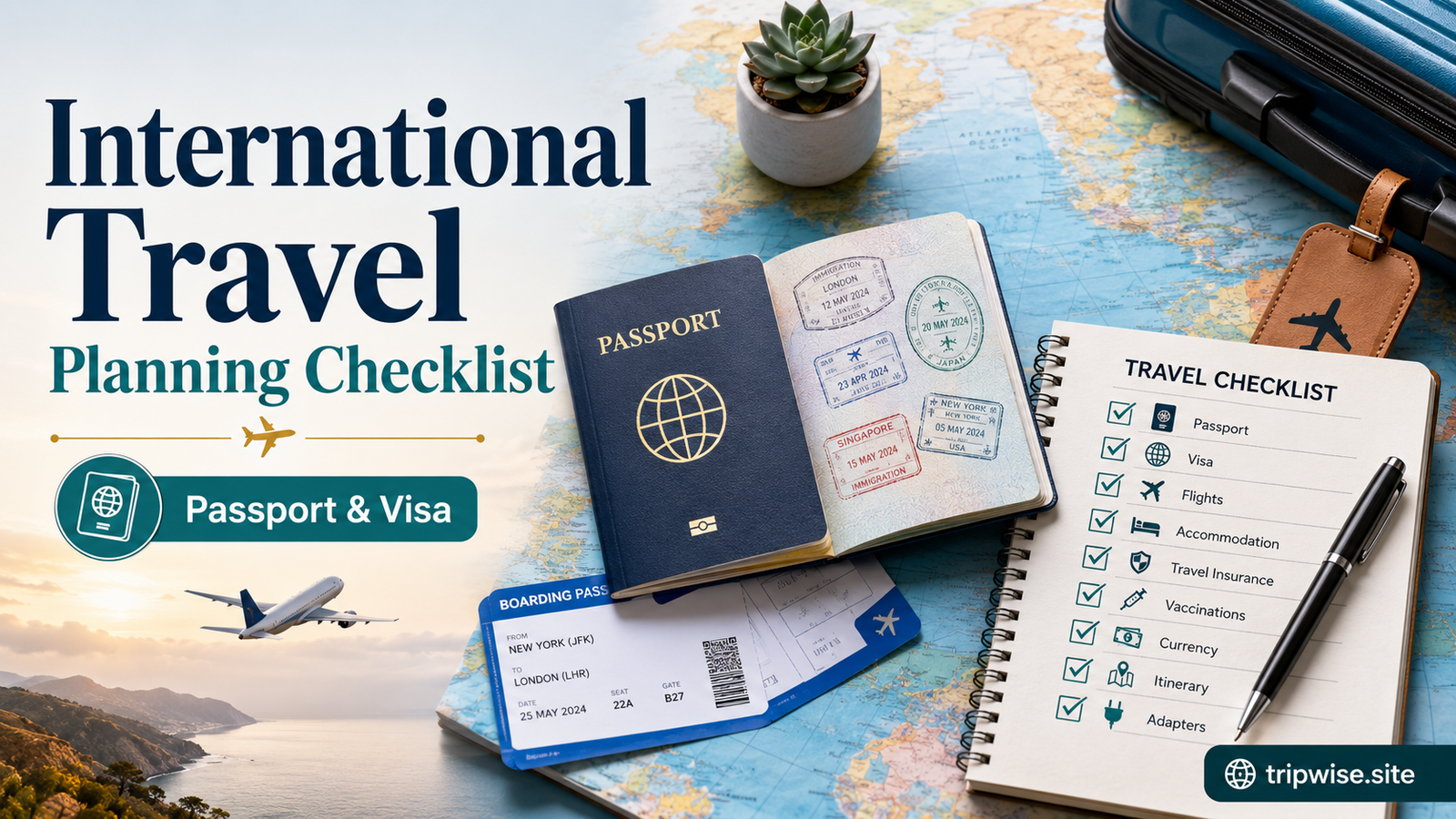
Quick International Travel Checklist
Before leaving for your first international trip, confirm that you have:
- A valid passport
- The correct visa or travel authorization
- Return or onward flight confirmation
- Accommodation details
- Travel insurance
- Copies of important documents
- A working debit or credit card
- Some emergency money
- Mobile data or an international SIM plan
- Necessary medicines in their original packaging
- Airport transportation arrangements
- Emergency contact information
Keep this checklist available on your phone and review it again a few days before departure.
1. Check Your Passport Validity Early
Your passport is the most important document for international travel. Do not wait until your departure date to check it.
Many destinations require a passport to remain valid for a certain period after your arrival or planned departure. The exact requirement depends on the country, your nationality, and your travel route.
Check:
- Your passport’s expiry date
- The destination’s passport-validity requirement
- Whether your passport has enough blank pages
- Whether the name matches your flight booking
- Whether the passport is damaged
A small difference between the name on your ticket and passport may create problems during check-in. Enter your full name exactly as it appears on your passport whenever you book an international flight.
Passport and entry requirements vary between countries and can change. Travelers should verify the rules for their specific destination instead of assuming that one general rule applies everywhere.
2. Research Visa and Transit Requirements
A passport does not automatically give you permission to enter every country. Depending on your nationality and destination, you may need:
- A traditional embassy visa
- An electronic visa
- An electronic travel authorization
- A visa on arrival
- No visa for a limited stay
Research the visa process before purchasing non-refundable bookings.
You should also check the rules of every country where your flight stops. Some travelers need a transit visa even when they do not leave the airport.
Use official immigration, embassy, airline, or government websites to confirm:
- Visa eligibility
- Application fees
- Processing times
- Required photographs
- Financial evidence
- Hotel or invitation documents
- Return-ticket requirements
- Transit restrictions
- Permitted length of stay
Do not depend entirely on social media posts, old travel blogs, or unofficial visa agents. International entry requirements can change with little notice, and airlines use current documentation systems when deciding whether a passenger can board.
3. Create a Travel Document System
Do not keep all your travel information in one place.
Create both physical and digital copies of:
- Passport information page
- Visa or travel authorization
- Flight itinerary
- Hotel reservations
- Travel insurance certificate
- National identity card
- Emergency contacts
- Prescription documents
- Driver’s licence or international driving permit
- Important payment receipts
Keep one printed set in your carry-on bag and another set separately in your luggage. Store digital copies in a secure cloud account or password-protected folder.
You may also give a copy of your itinerary and important documents to a trusted family member.
Copies will not replace your passport, but they can help you prove your identity and provide useful information if the original documents are lost or stolen. Official travel guidance also recommends keeping copies separately from the original documents.
4. Research Your Destination Before Booking
First-time international travelers often focus on attractions while ignoring practical destination information.
Before confirming your trip, research:
Local laws
An activity that is legal in your country may be restricted somewhere else. Check rules relating to medicines, photography, alcohol, clothing, public behaviour, driving, drones, and prohibited items.
Cultural customs
Learn how people normally greet each other, dress, tip, eat, communicate, and behave in religious or public places.
Weather
Check the expected weather for your actual travel dates rather than relying only on the destination’s general climate.
Safety conditions
Review current travel advisories, common tourist scams, areas to avoid, emergency numbers, and local transportation risks.
Public holidays
National holidays can affect transportation, business hours, tourist attractions, banks, and restaurants.
Good destination research helps you prepare without becoming overly worried. The goal is to understand the environment and avoid preventable problems.
Internal-link opportunity: Add a link here using the anchor text how to plan a trip step by step.
5. Purchase Suitable Travel Insurance
Travel insurance is easy to ignore until something goes wrong.
A suitable policy may provide protection for:
- Emergency medical treatment
- Medical evacuation
- Trip cancellation
- Trip interruption
- Delayed or cancelled flights
- Lost or delayed luggage
- Stolen belongings
- Personal liability
Read the policy conditions carefully. The cheapest policy may exclude important situations, such as existing medical conditions, adventure activities, valuable electronics, missed connections, or particular destinations.
Confirm:
- Medical coverage limits
- Deductible or excess amount
- Covered destinations
- Emergency contact procedure
- Cancellation conditions
- Activity exclusions
- Baggage limits
- Claim documentation requirements
Save the insurance certificate and emergency assistance number on your phone, but also carry a printed copy.
Travel insurance should not be treated as a replacement for responsible planning. It is financial protection for specific covered events, not a guarantee that every travel problem will be reimbursed. Official international travel guidance recommends reviewing medical and cancellation coverage before departure.
6. Build a Realistic International Travel Budget
Your trip cost includes more than flights and accommodation.
Create a budget covering:
- Visa fees
- Flights
- Baggage charges
- Airport transportation
- Accommodation
- Local transportation
- Food and drinks
- Attraction tickets
- Mobile data
- Travel insurance
- Shopping
- Tips
- Currency-conversion fees
- Emergency expenses
Keep an emergency fund separate from your daily spending budget.
When comparing hotel prices, consider the total cost. A cheaper hotel far from the city centre may increase your transportation expenses and travel time.
Before departure, check whether your bank requires a travel notice. Also review:
- Foreign transaction fees
- International ATM charges
- Daily withdrawal limits
- Card-blocking procedures
- Emergency card-replacement options
Carry at least two payment methods. Do not rely on a single card, mobile wallet, or large amount of cash.
Keep your backup card in a different secure location from your main wallet.
7. Book Flights With Enough Connection Time
The cheapest international flight is not always the best option for a first-time traveler.
When comparing flights, review:
- Total journey duration
- Number of stops
- Connection times
- Transit visa requirements
- Baggage allowance
- Airport changes
- Terminal changes
- Cancellation conditions
- Arrival time
- Transportation availability after arrival
Very short connections can be risky, especially when you need to pass through security, immigration, or a large unfamiliar airport.
When checking in your luggage, ask the airline representative whether your bag will travel directly to your final destination or whether you must collect and recheck it during transit.
Keep the luggage receipt or tracking sticker until your bag arrives.
Avoid booking separate tickets with different airlines unless you understand the risk. When flights are booked separately, one airline may not be responsible if a delay causes you to miss the next flight.
8. Pack Light and Follow Airline Rules
Overpacking is one of the most common mistakes made by new international travelers.
Before packing, check your airline’s current limits for:
- Checked luggage weight
- Carry-on dimensions
- Personal items
- Liquids
- Batteries
- Electronic devices
- Medicines
- Restricted items
Do not assume that all airlines use the same baggage rules. Rules may also differ between different tickets on the same journey.
Pack these items in your carry-on bag
- Passport and visa
- Boarding pass
- Wallet and payment cards
- Medicines
- Phone and charger
- Power bank, where permitted
- Valuable electronics
- Travel insurance documents
- Accommodation information
- One change of clothes
- Basic toiletries
- Essential personal items
Never place your passport, cash, important medicines, or valuable electronics in checked luggage.
Choose clothing that can be combined into different outfits. Pack according to the destination’s weather, cultural expectations, and planned activities.
Leave some empty space if you expect to buy souvenirs.
9. Understand the International Airport Process
Airport procedures vary, but most international journeys follow a similar sequence.
Step 1: Arrive with sufficient time
Follow your airline’s recommended arrival time and allow additional time during busy periods. First-time travelers should avoid arriving at the last minute.
Step 2: Find your airline’s check-in counter
Check the terminal and counter information on the airport screens. Present your passport and any required travel documents.
Step 3: Check your luggage
The airline will weigh your checked bag and attach a destination label. Confirm that the airport code on the label matches your final destination.
Step 4: Complete security screening
Follow the instructions given by airport security. Remove or separate items only when requested.
Step 5: Pass through departure immigration
Present your passport, boarding pass, and any requested documents. Answer questions clearly and honestly.
Step 6: Find your departure gate
Check the airport screens regularly. Gates can change after check-in.
Step 7: Board the aircraft
Keep your passport and boarding pass accessible. Airlines may board passengers in groups or zones.
Do not hesitate to ask airport or airline staff for directions. International airports are designed for travelers who may not know the local language or layout.
10. Prepare for Immigration and Customs
After arriving, you will normally pass through immigration before collecting your checked luggage.
An immigration officer may ask:
- Why are you visiting?
- How long will you stay?
- Where are you staying?
- Do you have a return ticket?
- How will you pay for your trip?
- Are you visiting anyone?
Answer briefly, truthfully, and confidently. Keep your hotel confirmation, return ticket, and other supporting documents accessible.
After immigration, collect your luggage and proceed through customs.
Customs rules control what travelers may bring into a country. You may need to declare:
- Food
- Plants
- Animal products
- Large amounts of cash
- Commercial goods
- Medicines
- Restricted equipment
Never carry a package for another person unless you know exactly what it contains.
When uncertain, declare the item or ask a customs officer. Failing to declare a restricted item can create more serious consequences than asking for guidance.
11. Arrange Internet Access Before Arrival
A working internet connection makes your first hours in another country significantly easier.
Mobile data can help you:
- Access maps
- Contact your hotel
- Book transportation
- Translate signs
- Check flight updates
- Find emergency information
- Use digital tickets
- Communicate with family
Possible options include:
- International roaming
- Local physical SIM card
- Travel eSIM
- Portable Wi-Fi device
- Airport or hotel Wi-Fi
Compare the price, coverage, data allowance, activation process, and phone compatibility before choosing.
Download important information for offline use, including:
- Destination map
- Hotel address
- Flight itinerary
- Translation language
- Emergency contacts
- Transportation instructions
Do not depend completely on public Wi-Fi. Avoid accessing sensitive financial accounts over unsecured networks.
12. Plan Your Transportation From the Airport
Do not wait until landing to decide how you will reach your accommodation.
Research:
- Official airport taxis
- Ride-hailing applications
- Airport buses
- Trains
- Hotel transfers
- Expected travel time
- Approximate fare
- Payment methods
- Operating hours
Save the complete accommodation address in both English and the local language where useful.
Be cautious of unofficial drivers approaching travelers inside or outside the terminal. Use marked taxi counters, official apps, or transportation providers recommended by the airport or accommodation.
If you arrive late at night, pre-arranging a transfer may be worth the additional cost.
13. Protect Your Money and Belongings
International travel does not require constant fear, but it does require awareness.
Use these basic precautions:
- Keep your passport in a secure place
- Carry only the money you need for the day
- Avoid displaying large amounts of cash
- Use bags with secure closures
- Do not leave your phone unattended
- Confirm taxi prices or use official meters
- Avoid sharing your hotel room number publicly
- Be cautious when strangers create distractions
- Use the hotel safe when appropriate
- Keep backup payment methods separately
Common tourist scams often involve urgency, distraction, unofficial assistance, fake fees, or offers that appear unusually cheap.
Pause before handing over money, documents, or your phone. A few seconds of verification can prevent a larger problem.
14. Manage Medicines and Health Needs
Pack enough medicine for the complete trip, plus a reasonable backup supply for unexpected delays.
Keep medicines:
- In their original labelled packaging
- In your carry-on bag
- With a copy of the prescription
- Within the destination’s permitted quantity
Some medicines that are commonly available in one country may be controlled or prohibited in another. Check the destination’s rules before departure.
Also consider packing:
- Basic first-aid items
- Hand sanitizer
- Prescription glasses
- Copies of medical information
- Suitable sun protection
- Insect repellent where necessary
Drink water regularly during long flights and move periodically when it is safe to do so. Travelers with medical conditions should discuss long-distance travel with a qualified healthcare professional.
15. Reduce Jet Lag
Jet lag occurs when your body needs time to adjust to a different time zone.
You can reduce its effect by:
- Sleeping properly before departure
- Changing your sleep schedule gradually
- Drinking enough water
- Limiting excessive alcohol
- Using the destination’s local time after arrival
- Spending time in natural daylight
- Avoiding long daytime naps
- Keeping the first day relatively flexible
Do not schedule your most demanding activity immediately after a long overnight flight.
Your first day should allow time for transportation, check-in, food, rest, and adjustment.
16. Respect Local Culture and Etiquette
Good travelers do more than follow laws. They respect the people and culture of the destination.
Before leaving, learn basic information about:
- Appropriate clothing
- Religious customs
- Photography etiquette
- Tipping practices
- Dining behaviour
- Public displays of affection
- Greetings
- Personal space
- Local gestures
- Bargaining practices
Learn a few useful words or phrases, such as:
- Hello
- Thank you
- Please
- Excuse me
- Help
- How much?
- Where is this place?
You do not need to speak the language fluently. A respectful effort usually creates a better interaction.
17. Keep Your First-Day Schedule Simple
Many first-time travelers create an ambitious itinerary for the day they arrive.
This is risky because:
- Flights may be delayed
- Immigration may take longer than expected
- Luggage may arrive late
- Transportation may be confusing
- Hotel check-in times may be restrictive
- You may be tired or jet-lagged
Plan only one or two simple activities near your accommodation.
Use the first day to:
- Check in
- Buy water or basic supplies
- Confirm your mobile connection
- Learn the surrounding area
- Identify nearby transportation
- Eat a comfortable meal
- Rest
A relaxed arrival creates a better start to the trip.
Internal-link opportunity: Add a link here using the anchor text free AI itinerary generator for vacation.
Common First-Time International Travel Mistakes
Not checking transit rules
A traveler may meet the destination’s requirements but still face problems during a layover.
Booking flights before securing a visa
Non-refundable flights can become an expensive problem if a visa is delayed or refused.
Carrying every document in one bag
Losing one bag should not mean losing every copy of your identification and bookings.
Depending on one payment method
Cards can be declined, blocked, lost, damaged, or unsupported.
Overpacking
Heavy luggage increases fees, slows transportation, and makes moving between locations more difficult.
Creating an overcrowded itinerary
A schedule with no flexibility becomes stressful when delays or unexpected changes occur.
Ignoring local laws
Not knowing a law does not normally remove your responsibility for following it.
Using unofficial transportation
Unlicensed drivers may overcharge travelers or create safety risks.
Forgetting offline information
Mobile data may not work immediately after landing. Important addresses and documents should remain available offline.
Frequently Asked Questions
What should a first-time international traveler know?
A first-time international traveler should understand passport and visa requirements, baggage rules, airport procedures, immigration, customs, payment methods, mobile connectivity, local transportation, and destination safety.
How early should I prepare for my first international trip?
Start researching as soon as you select a destination. Passport applications and visas may require significant processing time, while insurance, accommodation, flights, and transportation should also be arranged before departure.
What documents do I need for international travel?
Common documents include a valid passport, visa or travel authorization, flight itinerary, accommodation confirmation, travel insurance, return ticket, and any health or supporting documents required by the destination.
Should I carry cash when traveling internationally?
Carry a small amount of local or widely accepted currency for immediate expenses, but avoid carrying your complete travel budget in cash. Use more than one secure payment method.
What should I keep in my carry-on bag?
Keep your passport, visa, boarding pass, money, payment cards, medicines, electronics, chargers, travel documents, valuables, basic toiletries, and one change of clothes in your carry-on.
What happens when I arrive in another country?
Most travelers pass through immigration, collect checked luggage, complete customs procedures, and then leave the airport using public transportation, a taxi, ride-hailing service, or arranged transfer.
Is travel insurance necessary for an international trip?
Travel insurance is strongly recommended because international medical treatment, cancellations, delays, evacuations, or lost luggage can create substantial unexpected costs. Some destinations or visa types may also require specific insurance coverage.
How can I avoid feeling nervous during my first international flight?
Prepare your documents, arrive with enough time, understand the airport process, keep essential information accessible, and ask airline or airport staff when you are uncertain.
Final Thoughts
Your first international journey does not need to be perfect. Minor delays, language difficulties, route changes, and unfamiliar procedures are normal parts of travel.
The most useful travel tips for first time international travelers are simple: verify your documents, research your destination, protect your money, pack essential items in your carry-on, understand the airport process, and leave enough flexibility in your schedule.
Preparation gives you confidence, but flexibility allows you to enjoy the experience.
Once your passport, visa, flights, accommodation, insurance, and essential travel arrangements are organized, focus on discovering the destination and making your first international trip memorable.
Suggested final internal link: Create your personalized journey with the TripWise AI travel itinerary planner.