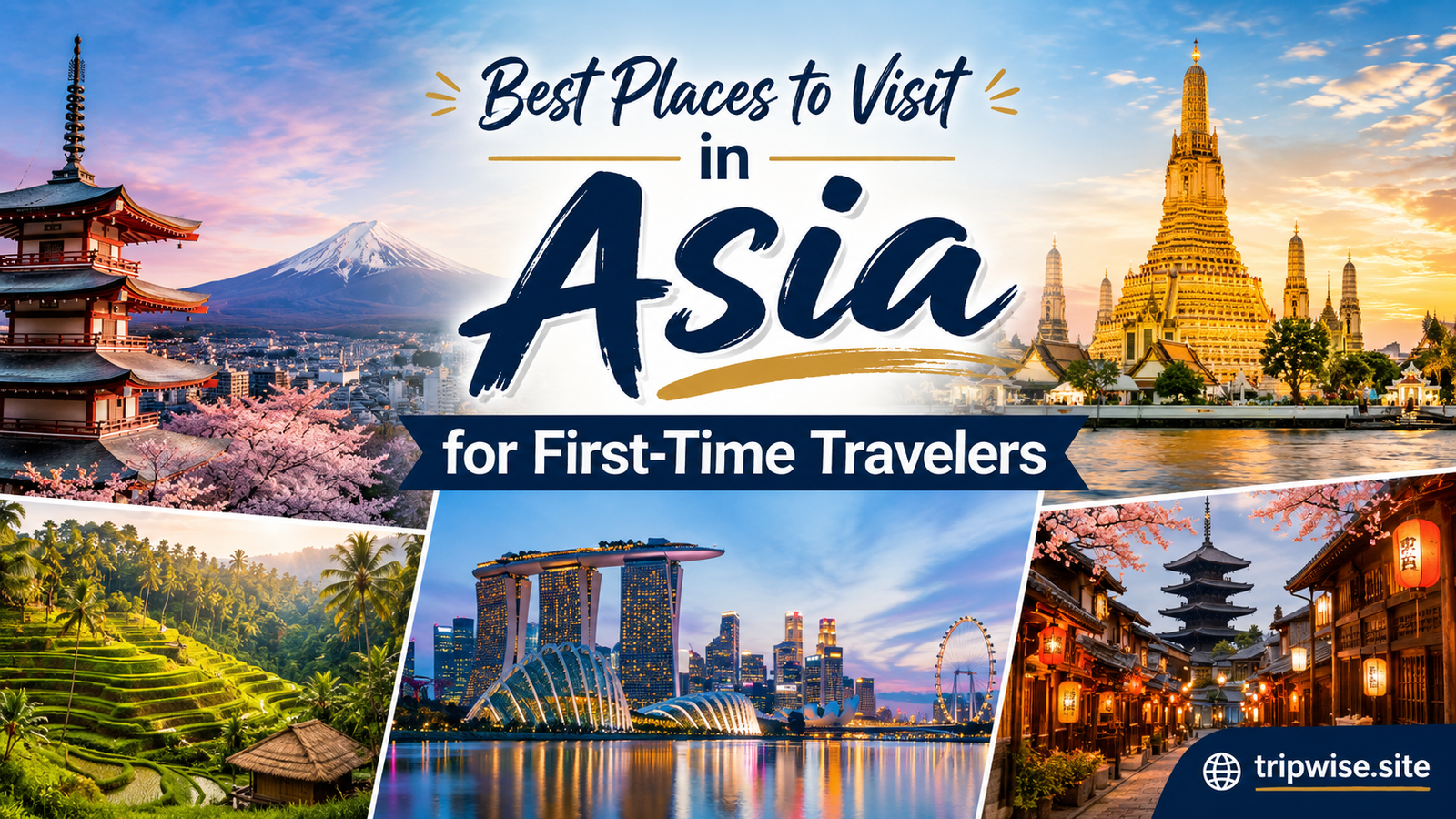

Planning your first trip to Asia can feel overwhelming. The continent stretches from high-tech megacities and ancient temple towns to tropical islands, mountain regions, and some of the world’s most exciting food destinations.
The best places to visit in Asia for first-time travelers are not simply the most famous ones. A good first destination should offer reliable transportation, convenient accommodation, clear tourist information, memorable attractions, and enough variety to make the journey worthwhile.
This guide covers 12 beginner-friendly Asian destinations, including modern cities, cultural capitals, beach escapes, and affordable food hubs. You will also find practical recommendations on how long to stay, what to experience, and how to choose the right destination for your travel style.
How These First-Time Asia Destinations Were Selected
Each destination was assessed using factors that matter when someone is visiting Asia for the first time:
- International flight connectivity
- Local transportation and ease of navigation
- Range of accommodation
- Cultural and natural attractions
- Food options
- Tourist infrastructure
- Suitability for short and extended trips
- Availability of reliable official travel information
No destination is completely effortless. Weather, crowds, language barriers, visa rules, and local customs still require preparation. However, the following places offer a practical balance between accessibility and an authentic Asian travel experience.
1. Singapore
Singapore is one of the easiest introductions to Asia. It is compact, highly connected, and supported by an extensive network of trains and buses. English is widely used, which reduces communication problems for many international visitors.
The city combines several distinct cultural influences within a relatively small area. You can walk through Chinatown, explore the colourful streets of Little India, visit the mosques and restaurants of Kampong Glam, and finish the day beside the futuristic Supertrees at Gardens by the Bay.
Food is a major part of the experience. Hawker centres allow visitors to try Chinese, Malay, Indian, and Peranakan dishes without depending entirely on formal restaurants.
Singapore is generally more expensive than neighbouring Southeast Asian destinations, particularly for accommodation and alcohol. However, public transportation and local food can help control daily costs.
Best for: Easy navigation, food, architecture, families, solo travelers, and short stopovers.
Ideal stay: Three to four days.
When to visit: Singapore can be visited throughout the year, but travelers should expect tropical heat, humidity, and occasional heavy rain.
The official Visit Singapore travel guide provides current information about transportation, payments, weather, and connectivity.
2. Tokyo, Japan
Tokyo may appear intimidating because of its size, but its organised transport system and clearly defined neighbourhoods make it manageable with proper planning.
Each district provides a different experience. Shibuya offers busy crossings, shopping, and nightlife. Asakusa introduces visitors to traditional Tokyo through Sensō-ji Temple and older shopping streets. Shinjuku delivers skyscrapers and evening entertainment, while areas such as Ueno and Yanaka provide museums, parks, temples, and a slower atmosphere.
Tokyo is also an excellent destination for food lovers. Visitors can explore sushi counters, ramen shops, convenience-store snacks, department-store food halls, and neighbourhood restaurants.
The main challenge is not a lack of options but having too many. Divide your itinerary by neighbourhood rather than travelling repeatedly across the city. This reduces transport time and prevents an exhausting schedule.
Best for: Technology, food, shopping, pop culture, urban exploration, and efficient public transportation.
Ideal stay: Four to six days.
When to visit: Spring and autumn usually offer comfortable sightseeing weather, but these periods can also bring higher demand. Winter is suitable for fewer crowds, while summer is generally hot and humid.
The Japan National Tourism Organization’s Tokyo guide covers the city’s major districts, attractions, and trip-planning information.
3. Kyoto, Japan
Kyoto is the cultural counterpart to Tokyo’s modern energy. The city is known for temples, shrines, gardens, traditional neighbourhoods, tea culture, and seasonal scenery.
Popular attractions include the red torii gates of Fushimi Inari Taisha, the bamboo paths of Arashiyama, Kinkaku-ji, Kiyomizu-dera, and the historic streets of Gion and Higashiyama.
Kyoto rewards slower travel. Attempting to cover every famous site in two days usually means spending too much time on buses and moving through crowded attractions. Select one part of the city for each day and visit high-demand locations early in the morning.
Travelers should also remember that Kyoto is a living city rather than an open-air museum. Private streets and residential areas must be treated respectfully. Visitors should follow local photography restrictions and avoid blocking narrow pathways.
Best for: History, temples, gardens, traditional culture, photography, and slower travel.
Ideal stay: Three to four days.
When to visit: Spring and autumn are visually impressive but busy. Winter provides a quieter experience, while summer can be hot and humid.
Kyoto Station is connected to Tokyo, Osaka, and other major cities through Japan’s rail network. The official JNTO Kyoto guide is a useful starting point for planning each district.
4. Seoul, South Korea
Seoul combines royal history, contemporary design, mountain scenery, shopping, street food, and global entertainment culture.
First-time visitors can explore Gyeongbokgung Palace, Bukchon Hanok Village, Insadong, Myeongdong, Hongdae, and the walking paths around the Cheonggyecheon stream. The National Museum of Korea also provides valuable historical context before exploring the rest of the country.
Seoul’s metro system makes it possible to visit different parts of the city without hiring a car. However, the city is large, so it is better to group nearby attractions together.
Food markets and casual restaurants are essential parts of the experience. Gwangjang Market is widely known among visitors, but neighbourhood restaurants often provide a calmer introduction to Korean food. Translation and navigation applications can help when menus or directions are not available in English.
Best for: Korean culture, history, shopping, skincare, nightlife, cafés, and modern city experiences.
Ideal stay: Four to five days.
When to visit: Spring and autumn generally offer comfortable temperatures. Winters can be very cold, and summers are often hot, humid, and rainy.
The official VISITKOREA platform includes destination information, suggested itineraries, transportation guidance, and Muslim-friendly travel resources.
5. Taipei, Taiwan
Taipei is a practical choice for travelers who want excellent food, efficient public transportation, traditional temples, modern neighbourhoods, and accessible day trips.
The city’s major attractions include Taipei 101, the National Palace Museum, Longshan Temple, Chiang Kai-shek Memorial Hall, and the shops and entertainment around Ximending. At night, markets such as Raohe and Ningxia introduce visitors to local snacks and casual dining culture.
Taipei also makes it easy to include nature in a city itinerary. Travelers can ride the Maokong Gondola, visit hot springs around Beitou, hike Elephant Mountain, or take day trips to Jiufen, Shifen, and the northern coastline.
The metro is straightforward to use, and major destinations are well connected. However, food stalls and smaller restaurants may have limited English signage, so a translation application is useful.
Best for: Night markets, temples, day trips, public transportation, tea culture, and independent travel.
Ideal stay: Four to five days.
When to visit: Autumn and spring are popular for comfortable weather. Summers can be hot and humid, with a greater possibility of severe weather.
Taipei’s official tourism site provides recommended attractions and city itineraries, while its MRT guide helps visitors understand local transportation.
6. Hong Kong
Hong Kong offers one of Asia’s most concentrated urban travel experiences. Within a few days, visitors can explore markets, temples, harbour views, skyscrapers, museums, beaches, hiking trails, and outlying islands.
A first itinerary can include Victoria Peak, the Star Ferry, the Tsim Sha Tsui waterfront, Temple Street Night Market, Central, Mong Kok, and the museums of the West Kowloon Cultural District.
The public transportation network connects most major attractions. The MTR is usually the fastest option, but ferries, buses, and traditional trams make the journey part of the experience.
Hong Kong is not only a city destination. Beaches, mountains, country parks, and islands are located close to the major commercial districts. A day trip to Lantau Island or Cheung Chau can provide a valuable break from the dense urban environment.
Accommodation can be expensive, and lower-cost rooms are often much smaller than first-time visitors expect. Check the exact room size and location before booking.
Best for: City views, Cantonese food, markets, hiking, shopping, and short stopovers.
Ideal stay: Three to five days.
When to visit: The cooler months from late autumn through early spring are generally comfortable. Summers are hot and humid, and tropical storms can disrupt travel.
The Hong Kong Tourism Board’s travel guide provides transportation, weather, attraction, and neighbourhood information.
7. Bangkok, Thailand
Bangkok is one of the best places to visit in Asia for first-time travelers who want an energetic introduction to Southeast Asia.
The city combines historic temples, river communities, busy markets, modern shopping centres, rooftop venues, and a globally recognised food scene. Major attractions include the Grand Palace, Wat Pho, Wat Arun, Chinatown, and the Chao Phraya River.
Bangkok can initially feel chaotic. Traffic, heat, crowds, and unfamiliar streets require patience. Using the BTS Skytrain, MRT, and river boats is often more predictable than relying entirely on road transport.
Dress respectfully when visiting temples and religious sites. Shoulders and knees should generally be covered, and shoes may need to be removed before entering certain buildings.
Bangkok also works well as the starting point for a longer Thailand itinerary. Visitors can continue north to Chiang Mai, visit the historic city of Ayutthaya, or fly south to Thailand’s islands and beaches.
Best for: Street food, temples, nightlife, markets, affordable luxury, and multi-destination itineraries.
Ideal stay: Three to four days.
When to visit: The period from November to February often brings comparatively cooler conditions, although it is also a popular travel season. The hottest and wettest periods vary across the country.
Use the Tourism Authority of Thailand’s destination portal to check attractions and regional travel information.
8. Chiang Mai, Thailand
Chiang Mai offers a slower and more manageable alternative to Bangkok. Its historic centre, mountain setting, night markets, cafés, temples, and craft culture make it particularly suitable for visitors who prefer a relaxed pace.
Within the Old City, travelers can visit temples such as Wat Chedi Luang and Wat Phra Singh. Doi Suthep provides elevated views and one of the region’s most important religious sites. Cooking classes, craft workshops, and trips into the surrounding countryside can add variety to the itinerary.
If you plan an animal-related activity, research the operator carefully. Avoid venues that promote riding, forced performances, or direct contact designed mainly for photographs. Marketing language such as “sanctuary” does not automatically confirm responsible animal-welfare practices.
Northern Thailand can also experience seasonal smoke and reduced air quality. Check current conditions before booking outdoor activities.
Best for: Temples, food, crafts, mountains, cafés, and slower travel.
Ideal stay: Three to five days.
When to visit: November through February usually offers more comfortable temperatures. Air-quality conditions should be checked if travelling during the regional burning season.
The official Chiang Mai destination guide highlights cultural sites, markets, gardens, and mountain attractions.
9. Hanoi, Vietnam
Hanoi provides a more intense first-time experience than Singapore or Seoul, but it is one of Asia’s most rewarding destinations for culture and food.
The Old Quarter is the centre of the visitor experience. Its narrow streets contain small restaurants, cafés, markets, temples, shops, and French-influenced architecture. Hoan Kiem Lake offers a calmer space within walking distance.
Other important attractions include the Temple of Literature, the Imperial Citadel of Thăng Long, the Vietnam Museum of Ethnology, and the city’s growing art and café scenes.
Crossing busy roads can be uncomfortable for new visitors. Move predictably, use pedestrian crossings where available, and avoid sudden changes of direction. Joining a reputable food or walking tour on the first day can also help you understand the city more quickly.
Hanoi is a useful base for continuing to Ninh Binh, Ha Long Bay, or the mountain regions of northern Vietnam.
Best for: Street food, history, café culture, photography, and energetic city travel.
Ideal stay: Three to four days.
When to visit: Spring and autumn often provide comfortable sightseeing conditions, but travelers should check regional weather because northern Vietnam has distinct seasons.
Vietnam’s official tourism site provides a detailed Hanoi destination guide covering food, culture, attractions, and local experiences.
10. Hoi An, Vietnam
Hoi An is a strong choice for travelers who want history, food, countryside, and beaches without the constant pace of a major city.
The Ancient Town is known for heritage buildings, lantern-lit streets, traditional houses, riverside restaurants, and Chinese, Japanese, Vietnamese, and European architectural influences.
Walking is the best way to explore the historic centre. Cycling tours provide access to rice fields, vegetable farms, and villages outside town. An Bang Beach and the attractions of Da Nang are also within reach.
Hoi An has become highly popular, and the centre can feel crowded during peak evening hours. Visit early in the morning to experience its streets more quietly, then explore the countryside or beach during the middle of the day.
The nearest major airport is in Da Nang, followed by a road transfer to Hoi An.
Best for: Couples, food, heritage, cycling, photography, beaches, and relaxed itineraries.
Ideal stay: Three to four days.
When to visit: The official tourism guide identifies March through May as a favourable period. Central Vietnam’s rainy season can bring storms and flooding, so check conditions before travelling later in the year.
The official Hoi An travel guide includes transport, weather, food, and sightseeing information.
11. Kuala Lumpur, Malaysia
Kuala Lumpur is an accessible and culturally diverse introduction to Southeast Asia. Malay, Chinese, Indian, and other influences shape the city’s food, religious sites, neighbourhoods, and festivals.
Popular attractions include the Petronas Twin Towers, Merdeka Square, the Islamic Arts Museum Malaysia, Central Market, Chinatown, and the Batu Caves outside the city centre.
Kuala Lumpur’s rail network connects many important areas, although some attractions still require short taxi or ride-hailing journeys. Selecting accommodation near an MRT or LRT station can make a significant difference to the trip.
The city is particularly rewarding for food-focused travelers. Hawker stalls, traditional coffee shops, shopping-centre food courts, and neighbourhood restaurants provide options across different budgets.
Kuala Lumpur also functions as a convenient gateway to Penang, Melaka, Langkawi, and other Malaysian destinations.
Best for: Multicultural food, architecture, shopping, Islamic art, and affordable city breaks.
Ideal stay: Three to four days.
When to visit: Kuala Lumpur remains hot and humid throughout the year. Rain is possible in any month, so a flexible daily plan is more useful than relying on a completely dry forecast.
Current destination information is available through the official Tourism Malaysia website.
12. Bali, Indonesia
Bali is one of Asia’s most recognisable destinations, but choosing the correct area is essential. The island is not a single beach town, and travel times can be longer than distances suggest.
Ubud is suitable for rice terraces, temples, art, wellness activities, and inland scenery. Sanur offers a calmer coastal environment, while Seminyak and Canggu attract visitors interested in restaurants, shopping, surfing, and nightlife. Uluwatu is known for cliffs, beaches, surf breaks, and its temple setting.
Instead of changing hotels every night, select one or two bases. This reduces time lost in traffic and creates a more relaxed trip.
Visitors must respect Balinese religious customs. Sacred sites require appropriate clothing and behaviour, and ceremonies should not be treated as staged entertainment. Environmental pressure and overtourism are also serious concerns, so use licensed accommodation and responsible local operators.
Best for: Beaches, wellness, surfing, temples, nature, couples, and longer stays.
Ideal stay: Five to seven days.
When to visit: Bali’s relatively drier period commonly falls between April and October, while the wetter months can bring heavier rainfall and higher humidity.
The official Indonesia tourism guide to Bali covers the island’s beaches, cultural attractions, temples, and inland destinations.
How to Choose the Right Asian Destination for Your First Trip
The right destination depends on the experience you want rather than which country is most popular.
Choose Singapore, Tokyo, Seoul, Taipei, or Hong Kong if convenient public transportation and organised city travel are your priorities.
Choose Bangkok, Hanoi, or Kuala Lumpur if you want food, markets, cultural contrast, and a more energetic atmosphere.
Choose Kyoto, Chiang Mai, or Hoi An if you prefer temples, traditional neighbourhoods, and a slower itinerary.
Choose Bali if you want to combine culture with beaches, wellness, nature, or a resort stay.
Budget also matters. Singapore, Tokyo, Hong Kong, and Seoul can require more spending on accommodation. Thailand, Vietnam, Malaysia, and parts of Indonesia may offer more options for travelers controlling daily costs, although prices vary significantly by location and travel style.
Practical Asia Travel Tips for First-Time Visitors
Do Not Visit Too Many Countries at Once
A common mistake is trying to visit four or five countries in two weeks. Flights, airport transfers, immigration procedures, and hotel changes consume more time than expected.
For a 10- to 14-day trip, choose one country with several destinations or combine two well-connected cities.
Check Entry Requirements for Your Passport
Visa exemptions, electronic travel authorisations, arrival forms, passport-validity rules, and transit requirements depend on nationality and can change.
Confirm the requirements through official immigration or embassy websites before purchasing non-refundable tickets.
Keep Both Card and Cash Options
Digital and card payments are common in many major Asian cities, but markets, small restaurants, temples, transport operators, and rural businesses may still prefer cash.
Do not depend on one payment method.
Use Travel Insurance
Choose coverage that matches your itinerary and planned activities. Standard policies may exclude motorbike use, hiking at certain elevations, diving, or other adventure activities.
Respect Religious and Cultural Sites
Dress requirements and photography rules vary. Avoid touching religious objects, climbing on monuments, interrupting ceremonies, or photographing people without permission.
Plan Around the Weather
Asia does not have one universal travel season. Japan, South Korea, Thailand, Vietnam, Malaysia, Indonesia, and other destinations follow different temperature, rainfall, storm, and air-quality patterns.
Research the specific city and region rather than relying on general advice about visiting “Asia.”
Leave Space in the Itinerary
Jet lag, heat, unfamiliar transportation, and sensory overload can make the first few days tiring. Include flexible time instead of scheduling every hour.
Frequently Asked Questions
What is the best Asian destination for a first-time traveler?
Singapore is one of the easiest destinations because of its compact size, extensive transportation network, and widespread use of English. Thailand is a better choice for travelers who want cities, temples, food, and beaches within one country. Japan is ideal for travelers interested in culture, transportation, food, and highly organised urban experiences.
How long should a first trip to Asia be?
Ten to fourteen days is a practical length for most first-time visitors. It allows enough time to explore one country properly or combine two nearby destinations without turning the trip into a sequence of airport transfers.
Is Asia expensive to visit?
Travel costs differ significantly. Singapore, Japan, Hong Kong, and South Korea can have higher accommodation costs, while Vietnam, Thailand, Malaysia, and Indonesia may provide more lower-cost options. Your travel season, hotel standard, location, and number of flights will have the greatest effect on the final budget.
Is Asia suitable for first-time solo travelers?
Many major Asian destinations are manageable for solo visitors, especially Singapore, Tokyo, Seoul, Taipei, Bangkok, and Kuala Lumpur. However, personal safety conditions, local laws, weather events, and transport risks can change. Check current official travel advice and follow the same precautions you would use in any unfamiliar destination.
What should I pack for my first trip to Asia?
Pack lightweight clothing, comfortable walking shoes, modest clothing for religious sites, sun protection, a reusable water bottle, necessary medication, and a compact rain layer. Check the destination’s season before travelling because temperatures and rainfall vary widely across Asia.
Final Thoughts
The best places to visit in Asia for first-time travelers combine memorable cultural experiences with manageable transportation, reliable accommodation, and enough variety to suit different travel styles.
Singapore provides the easiest introduction, while Tokyo and Seoul offer organised megacity experiences. Bangkok and Hanoi deliver greater intensity, food, and cultural contrast. Kyoto, Chiang Mai, and Hoi An are better for slower exploration, while Bali combines temples, nature, and beaches.
Whichever destination you select, avoid overloading your itinerary. A well-planned first trip should give you enough time to understand a place rather than simply collect destinations.